Urban Slowsteading
What is Urban Slowsteading?
Urban Slowsteading™: a mindset that informs a lifestyle.
Urban slowsteading is a mindset that informs a lifestyle, where people living in towns and cities create a home environment that encourages small-scale gardening and whole food cooking, and where creativity and joy are cultivated, all of it made possible by a decluttered home and a decluttered mind, and kept within the capacity of the household that lives it.
Most mornings at Rosemary Road begin with bread, mixed at six o'clock while the house is still quiet, and by the time the loaves come out of their cast iron pots there is enough for the children's lunch and the next morning's toast. Outside, the traffic on the main road never really stops and there is nearly always a building site somewhere nearby, but none of that has ever kept the bread from rising. I live in a big city with a full house and a full calendar, and I have no farm and no plans to buy one. What I do have is a way of relating to the life I already live, at a pace and a size that this full household can actually carry, and it is this that I call urban slowsteading.
Mindset first
A mindset before it is a lifestyle
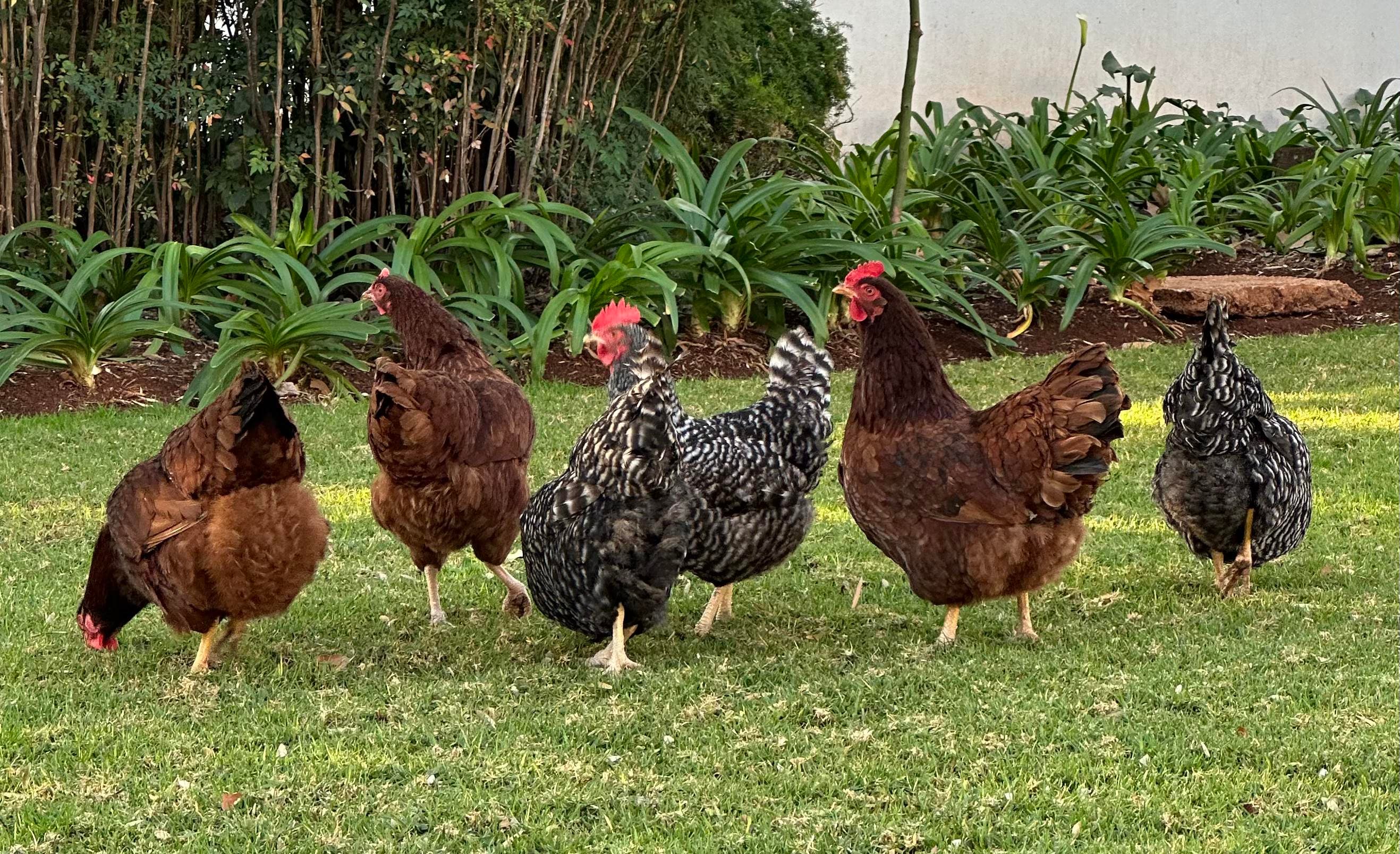
People often assume that slowsteading is homesteading on a smaller scale, a few chickens and a vegetable patch squeezed into a suburban garden, but it is not. Homesteading is about land and self-sufficiency, while urban slowsteading begins somewhere else entirely, in the way you think about your home and what you allow to fill it.
The garden and the bread are what it looks like from the outside, but the mindset comes first, and it is the mindset that makes the lifestyle possible in a busy urban life. I cannot supply all the food my family needs, and I do not try to. What I can do is become a fulfilled and contented steward of my household, right here in the middle of the city. Knowing what my household can carry, and choosing within it, is part of that stewardship rather than a limit on it.
Capacity
Room to carry it
Clutter is very rarely the real problem in a home, however much it looks like one. A cupboard that will not close, a diary with no white space left in it, a garden full of half-finished projects and a head that is still running through tomorrow's list at midnight are all signs of the same thing, a life running at the very edge of what it can carry.
That is what I mean by capacity, the time and energy a household really has to give, which changes with every season of family life. I learnt it the hard way as a young mother and caregiver, when exhaustion forced me to rethink what I was asking of myself and of the people around me. Since then I have come to believe that slowsteading does not work when it is piled on top of a life that is already full, and that it only takes root once there is room for it.
Decluttering makes that room, in the home and in the mind, and capacity decides what goes into it. A household with a newborn, a household caring for an ageing parent, a household of teenagers writing exams and a household of one will each carry a very different slowstead, and every one of them is the real thing.
Capacity is not a fixed amount either, since it grows as skills become second nature and shrinks in a hard week, and a slowstead that is honest about both will last far longer than one built for the best week of the year.
Why urban
Why urban
Most of us are not going anywhere, because our work, our children's schools, our families and our friendships keep us in the city, and waiting for a farm that may never come means waiting for a life that could have started years ago. Being in a reality you cannot leave does not mean you cannot dream. Urban slowsteading is not a dream that takes you away from your reality, but one that creates satisfaction and joy inside it. In the city it is seldom the size of the garden that runs out first, but the hours and the energy left at the end of the day, which is why capacity sits at the heart of urban slowsteading.