It Was Never About the Mess
There is a shelf in my pantry that I would rather you did not look at, and I am fairly certain there is one in your house too. Three bags of flour open at once and none of them more thanhalf full, a tub of oats that somebody folded shut instead of clipping, half a packet of dried beans a good deal older than I would like to admit, and the small containers I decanted things into and never labelled, so that I now own two jars of a pale powder that could be cornflour and could just as easily be icing sugar. Nothing on that shelf is rubbish, and every item on it was bought on purpose by somebody who meant well, which is precisely what makes it so difficult to deal with.
THE FIVE PILLARS OF SLOW STEADYING, PART TWO: DECLUTTER
There is a shelf in my pantry that I would rather you did not look at, and I am fairly certain there is one in your house too. Three bags of flour open at once and none of them more than half full, a tub of oats that somebody folded shut instead of clipping, half a packet of dried beans a good deal older than I would like to admit, and the small containers I decanted things into and never labelled, so that I now own two jars of a pale powder that could be cornflour and could just as easily be icing sugar. Nothing on that shelf is rubbish, and every item on it was bought on purpose by somebody who meant well, which is precisely what makes it so difficult to deal with.
In the previous blog we began with the dream, and with the permission to want something before you can prove that it will work. This is the pillar that comes directly after it, and it is the one people assume I must enjoy the most, which I do not, particularly. I do it because nothing I dreamt about was ever going to fit into a life that was already full to the brim.
I have written three books about decluttering, which tends to give people the impression that I am a woman with a labelling machine and a colour-coded pantry, which I am not. What those books were circling all along, and what I would say now in a single sentence, is that it was never about the mess.
The mess is only ever a symptom, and what we are actually dealing with is capacity, and most of us are running at the very edge of ours without ever having agreed to it. Everybody assumes this pillar is a physical action, a business of boxes and cupboards and bin bags, and I have come to believe it works the other way about. Clearing out thoughts, relationships, expectations and goals is what makes the mental space first, and the physical clearing goes far more easily once that has happened, which is why I would rather talk about what is filling you up than about what is filling your shelves. The cupboard is full, the diary is full, the inbox is full, the weekend is spoken for, and then a longing turns up for something slower and truer, and there is nowhere in the whole arrangement to set it down.
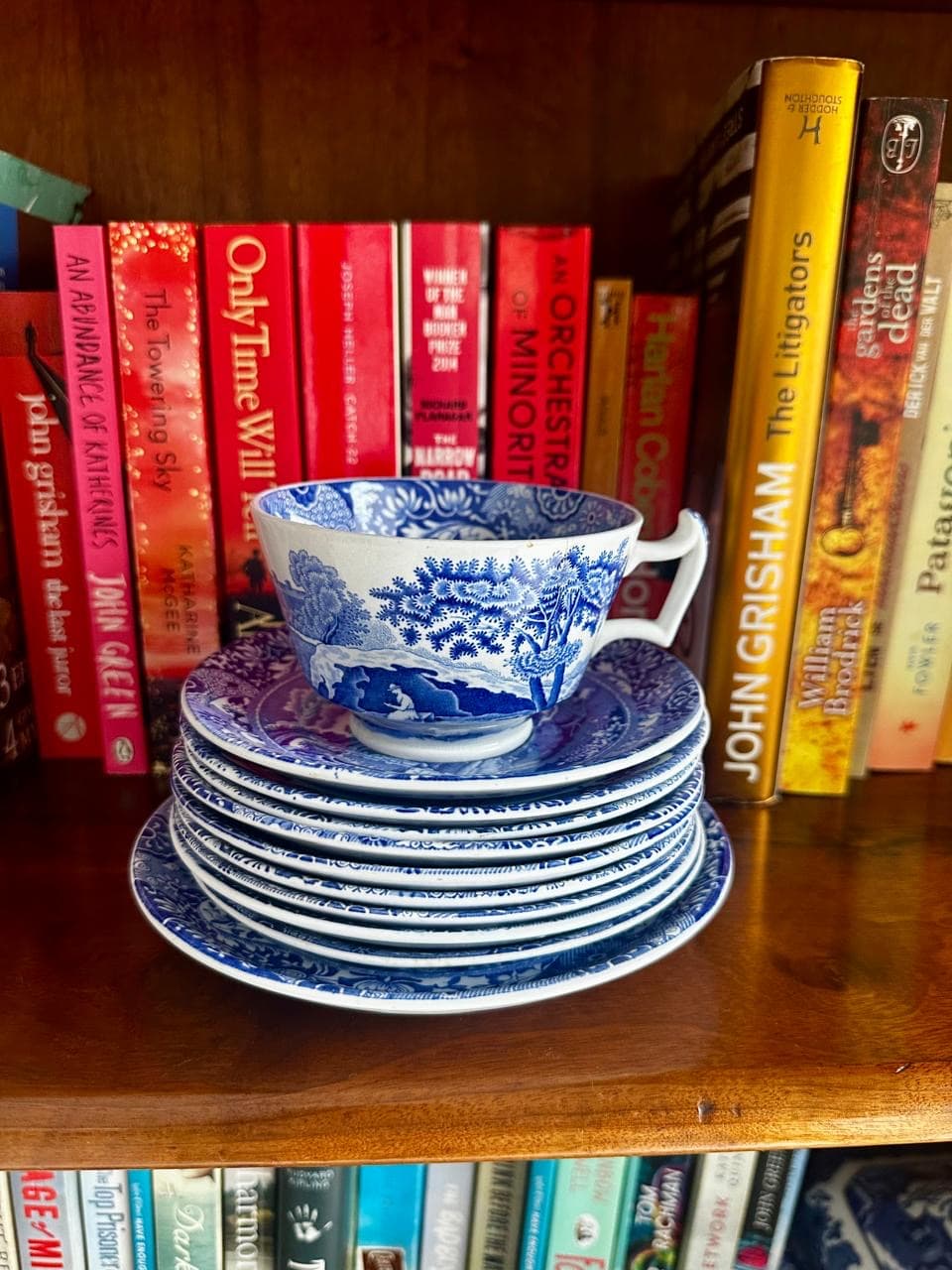
What we keep, and why
There was a season when I had a storeroom to clear after a death in the family, and it took days. I am not going to make a lesson out of somebody else's life, but I learnt one thing in that room that I have not been able to unlearn since. Almost nothing on those shelves was being kept for its own sake. It was being kept because letting it go would have meant agreeing that something had ended, and a full shelf is a way of insisting that nothing has changed. I said a prayer in there somewhere between the second and third day, and then I carried on with the boxes.
I came home from that and looked at my own house rather differently. The tub of fabric I was keeping for the sewing I would do when things calmed down. The good dinner service waiting for an occasion grand enough to deserve it. The bread machine I have not touched since I taught myself to do it by hand. None of that was mess, and all of it was a small argument I was having with myself about who I was going to be, and I was losing every one of those arguments quietly, on a shelf, in the dark.
That is what this pillar is actually for, and it is not tidiness, which is a matter of temperament and none of my business, but capacity. You are making room, at home and in your diary and in your own head, for the thing you admitted you wanted in the first place.
And what stays
My mother kept her recipes in a handwritten book, and the green fig preserve I make every November comes out of it, adjusted so many times over the years that it is hardly her recipe any more and still entirely hers. That book is not clutter and it never will be. It earns its place every year, and it will go on earning it for as long as there are figs on that tree.
This is the part that most decluttering advice gets backwards. It treats letting go as the virtue, when the real work is deciding what is genuinely worth keeping and then treating it as though it matters. There are two jobs in this pillar and they take different verbs, because you choose what you let in, and you tend what you already have.
Many people, one house
I should say plainly that I do all of this in a house with nine children still living in it, four of them teenagers, and that changes the shape of this considerably. You can only clear what is actually yours, and I found that out the slow way, by sorting out a bedroom that belonged to somebody else and discovering that whatever I gained in floor space I lost twice over in trust.
So the boundary here is a narrow one and I keep to it. My cupboards, my diary, my inputs, the shared spaces by agreement, and everybody else's belongings left exactly where their owner put them. It is slower, and it also holds, because a room does not stay clear when it was cleared against somebody's will, and a child who has watched her things vanish while she was at school learns to keep more, not less.
What has genuinely shifted things here is not a rule at all. It is that the rest of them can see the difference in me when there is space to move, and a couple of them have quietly started making a bit of space of their own, without a word from me about it.
Why there is no list in this blog
I am not going to hand you a thirty-day plan or a set of rules about how many jerseys a person is allowed to own. Decluttering advice tends to arrive with a faint whiff of judgement about it, before and after photographs and a tone suggesting you have let things slide, and I have never once seen that make anybody's life gentler. You are not behind, and you are a person whose house fills up because people live in it, which is the correct reason for a house to fill up.
What is worth saying is that the fullness is not only in the cupboards. Mine builds up in the diary faster than anywhere else, in the outing I took on months ago when it still looked comfortably far away, in the newsletters I subscribed to and never read, in the good and worthy things I said yes to while I was tired. All of that occupies the same space the dream needs. It simply does not sit still long enough to be photographed.
Something small to start with
Start with a single shelf, not the pantry or the wardrobe, and not a whole afternoon given over to it, just one shelf and one question asked of everything standing on it: do I use this or love this, or am I keeping it so that I do not have to decide? Put the third group in a box and put the box out of the way. You do not have to give it away at all, now or ever, if that is not where you are. You only have to stop living with it in front of you.
If the fullness in your life is more diary than cupboard, take one thing out of the diary instead. Only one, and preferably one of the respectable ones you said yes to for the wrong reasons. Then watch what turns up in the gap, because it never stays empty for long.
Next time we come to design, which is where you settle what your own version of all this looks like, rather than borrowing the shape of mine or anybody else's.
Empty one shelf, leave it empty a while, and see what asks to live there.
What are you carrying that you never quite agreed to carry? For some of us it is boxes and cupboards, and for some it is a diary filled with what other people expect, and no two of those look remotely alike from the outside. I would love to know what you found when you looked, so do leave me a comment and tell me.