
Honey Tastes of Its Field
When I transcribed the handwritten notes that became my Substack letter, ***The Good of the Hive***, one line kept pulling me back to it: ***hive activity is not one-size-fits-all, because every hive depends fully on the natural environment it stands in, and the honey it produces tastes like its field.*** I wrote underneath it, almost as an afterthought, that this is just as true of a slowstead, and the longer I sat with that afterthought, the more I realised it deserved a blog of its own.
Why no two slowsteads should look the same
When I transcribed the handwritten notes that became my Substack letter, The Good of the Hive, one line kept pulling me back to it: hive activity is not one-size-fits-all, because every hive depends fully on the natural environment it stands in, and the honey it produces tastes like its field. I wrote underneath it, almost as an afterthought, that this is just as true of a slowstead, and the longer I sat with that afterthought, the more I realised it deserved a blog of its own.
Every jar of real honey carries the taste of the place it came from, so bees working through citrus blossoms make a light and fragrant honey, while fynbos honey from the Cape has a depth and a wildness you will not find anywhere else. Beekeepers know this well, and it is one of the reasons raw honey from a small local hive tastes nothing like the blended honey on most supermarket shelves.
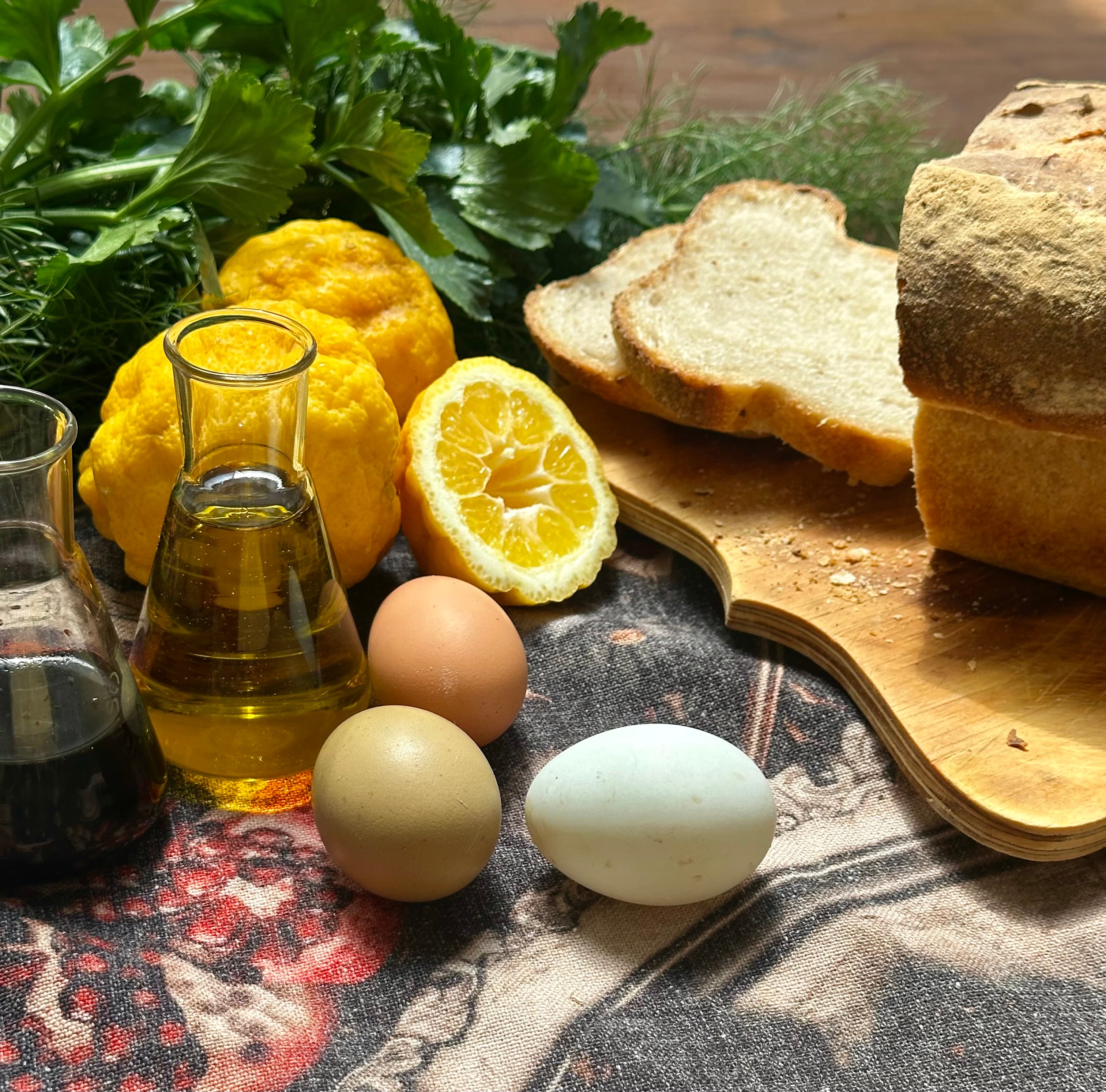
The field you actually have
A hive cannot choose its field, so the bees work with whatever grows within flying distance, whether that is a suburb full of flowering gardens or a stretch of wild coastal bush. They do not sit in the hive waiting for a better field to appear, and the honey is no less honey for being made from what was close at hand.
Our own slowstead at Rosemary Road has taught me this, sometimes the hard way, and the field I was given was far richer than I knew. The fig tree still gives us green figs for our preserve at the end of every year, but it once had company, since a huge mulberry tree and a pear tree stood in the driveway. Before my mindset changed towards slowsteading, trees were just trees, and when we renovated the outside building I did not give a second thought to having them removed. Today I would do anything to have them still standing as part of the Rosemary Road heritage; they were part of my field all along and I simply did not see it. I have planted many fruit trees over the years since then, and now I have to wait patiently for their harvest.
Three fields, three kinds of honey
Most of my slowsteading happens at Rosemary Road, but we also spend time at the coast, and the two places could hardly taste more different. My city slowstead has a truly urban character, busy and fast-paced in its crop turnover and in the sheer amount of activity that happens there every day. The weeks go by so quickly that I have to be mindful in order to really embrace the seasons and notice how they change.
At the coast everything is slower and happens at a leisurely pace, and although I plant fruit trees and sow herbs before we head home, what I find when we return depends completely on nature itself. The ocean shapes what we do and what we eat, so that even our meals at the coast are unlike the ones we cook in the city.
A third little slowstead with its own taste and personality lives on the balcony, set up for afternoon tea and for slowing down, and because the herbs and the lemon tree grow in pots, I attend to them every day, assessing the heat and the rain with a careful eye so that nothing dries out or drowns. My connection with those few pots is far more intimate than with the garden, and each new leaf brings its own small joy.
None of these places is the proper version of my slowstead; they are three fields with three kinds of honey, and I would be foolish to try to make one taste like another.
Borrowed fields
The trouble starts when we try to make honey from somebody else's field. It is very easy to look at a beautiful farmhouse pantry or a few acres with a milking cow and decide that our own small slowstead falls short, when in fact it is drawing from another field altogether. I have never believed in a formula for slowsteading, because a formula assumes that everyone is working with the same flowers.
I find plenty of inspiration in what other people make and grow, and I will happily borrow an idea and try it at home, but the idea has to be adapted to my field before it can become mine.
Some borrowed ideas need more time to settle into my field, while others have to change shape completely. I love an overgrown garden arch or walkway, and maybe I am in too much of a hurry, but my own arches stand bare for many months of the year. I have never yet reached up to pick a cucumber from them, but I am not giving up, and I will find the right cultivars and lead them up correctly until, some day, I wistfully reach up and pick my produce hanging heavy from the overhead foliage.
I have given up on fenceless garden beds, though, because my chickens and ducks are much too enthusiastic and rough with my vegetables, so everything now grows happily behind a fence.
My mother had no patience for honey-flavoured syrup sold as honey, and I have come to feel the same way about a slowstead copied straight from somebody else's pictures, since it may look the part without ever carrying the taste of a real place.
Your people are part of your field
A field is not only the soil and the weather around it, and for a slowstead the people who live it are part of the field too. Urban slowsteading is meant to be kept within the capacity of the household that lives it, and that capacity looks very different for a single person in a flat, a couple whose children have left home, a young family with two working parents or a long table like ours with nine of our twelve children still at home. Each of those households, and the community around it, will make its own kind of honey, and none of them is a lesser version of another.
I bake bread often, and yet I have very little advice to give on freezing it, since none of what I bake ever reaches the freezer in a house as full as ours. A friend and her husband, on the other hand, have mastered the art of preserving a freshly baked loaf, so that on the other side of being frozen it tastes as if it came out of the oven that very morning. Their field is not like mine, and it has grown a skill my own kitchen has never needed.
Something small to start with
Before you buy a single seed or copy an idea you have seen elsewhere, walk slowly around your home, inside and out, and look for what is already there, perhaps a tree you have not yet picked from or a windowsill that catches the sun. Write down one thing you have been overlooking and start with that, and let your slowstead grow out of the field you already have.
I taste honey differently now, thinking of the field behind it, and I have learnt to look at my own slowstead in the same way. It will never taste like anyone else's and it was never meant to, because the best honey is simply the honest taste of the place where the bees were working, and the best slowstead is the honest taste of yours.
What is growing in your own field, whether it is a whole garden or a single windowsill, that you might have been overlooking? Tell me in the comments; I would love to hear what your slowstead tastes like.