
A Dream That Fits Your Life
The apricot outside the kitchen window comes into blossom ahead of everything else, the way it does every year, and there is usually a row of seed trays along the sill where I have been pressing tomato and basil seed into damp soil while the kettle boils. Some of those trays come to very little and some of them feed us for months, and there is never any way of telling at the outset which will do which. That uncertainty is more or less the whole subject of this blog.
The apricot outside the kitchen window comes into blossom ahead of everything else, the way it does every year, and there is usually a row of seed trays along the sill where I have been pressing tomato and basil seed into damp soil while the kettle boils. Some of those trays come to very little and some of them feed us for months, and there is never any way of telling at the outset which will do which. That uncertainty is more or less the whole subject of this blog.
I am often asked how slowsteading works, as though there were a sequence to follow and I had been keeping it to myself. There isn't one, and I would not trust a formula if somebody handed me one, but there is a shape to the way this has unfolded at Rosemary Road, and it has settled into five pillars: dream, declutter, design, develop, do. Over the next few blogs, I would like to walk through them properly, one at a time, because I have squashed them all into a single paragraph too often, and they deserve more room than that. We begin where it all started here, with the dream.
For years I answered the question of why I slowstead by explaining what I do. I would talk about the chickens and the sourdough and the herb garden, which is the easy answer and which tells you nothing. What I was avoiding was the harder answer underneath it, the one about the woman I was before any of this began, who was exhausted in a way that sleep did not touch, who was caring for a great many people rather well and for herself hardly at all, and who could not have told you what she wanted because nobody had asked her, least of all herself.
That is usually where a dream starts. Not on a vision board and not on a quiet Sunday afternoon with a new notebook, but in an ache that has gone on long enough to become the background noise of your life. Something in you has grown tired of the way things are running. That tiredness is not a failure of gratitude, and it is not a character flaw. It is information, and it is some of the most useful information you will ever be given.
Planting for a harvest you cannot see
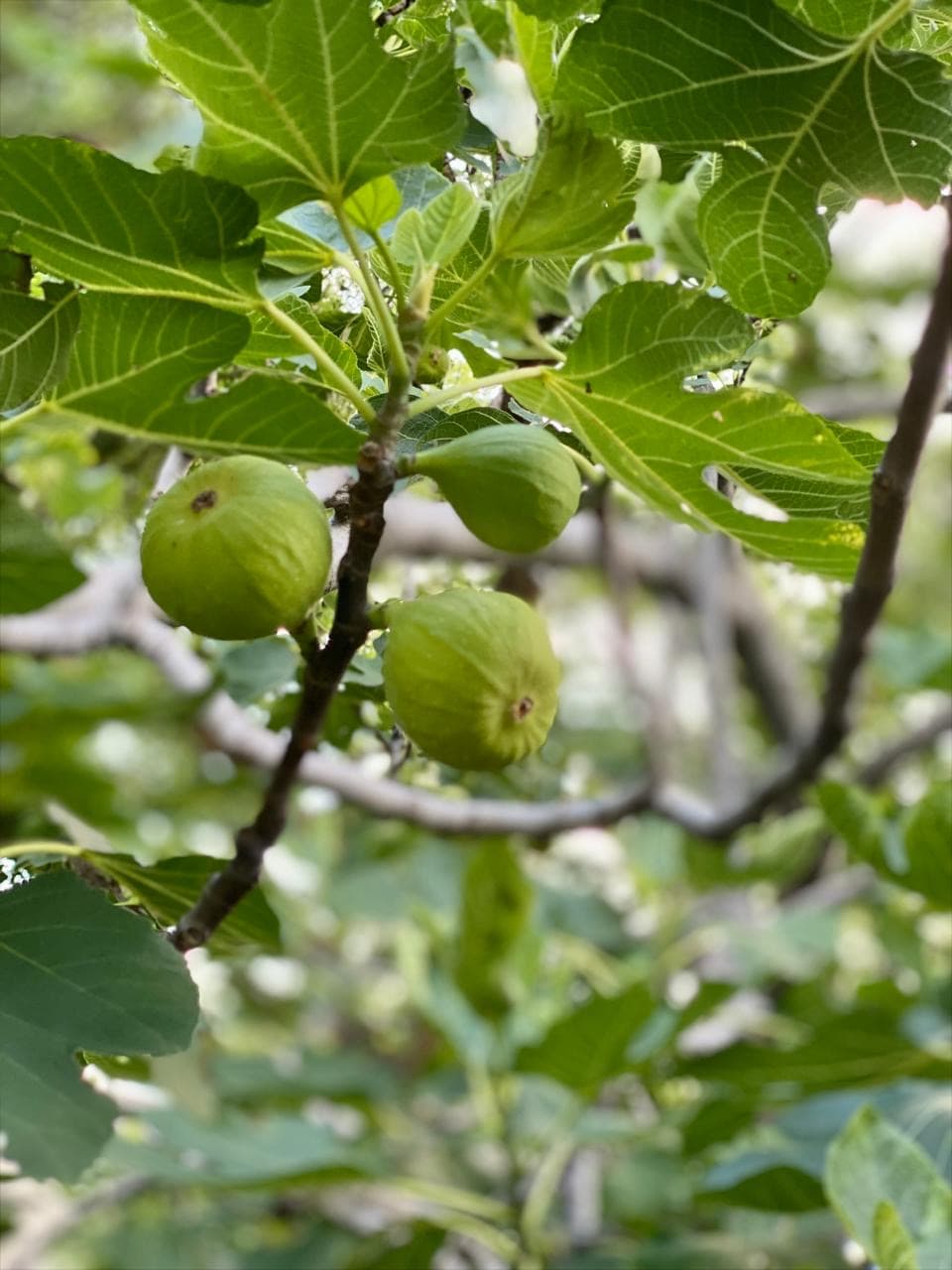
A few years ago now, we put in the fruit trees. Peach, apple, cherry, apricot, almond, pecan, avocado, olive, and pear, most of them small enough at the time to carry to their holes in one hand. The fig came with the house and is still the only one that gives us a proper crop, a great pile of hard green figs every November that I pick early to beat the birds and turn into green fig preserve. The rest give us a handful of fruit each summer, if that. We are promised a real harvest before long.
I can remember standing at the bottom of the garden with a spade and a bag of compost, doing the arithmetic on how old my youngest would be by the time that pecan gave us anything worth shelling, and thinking that this was either the most hopeful thing I had ever done or the most foolish. Nobody plants a pecan for this summer. I grew up with the family story of my great uncle who planted a grove of pecans the year he turned 80, and when asked if he knew pecans can take many years to produce a harvest, he answered that he had more than enough time to harvest the nuts. Uncle Ben lived to be 98, many years after the first good pecan harvest.
You plant trees and other perennial plants because you have decided, in a corner of yourself you may not have admitted to yet, that you are going to be here, and that the life you are after is worth beginning before you can prove that it will work. There is a line in the Scriptures about there being a season for everything, and I have leaned on it more than once while waiting for a tree to get on with it.
That is the first pillar. It is not the planning, which comes later, and it is not the clearing out, which comes directly after this. It is the permission to want something, held long enough and honestly enough that you would put a tree in the ground for it.
The dream is not a different life
This is where I got it wrong for the longest time, and where I suspect I am not alone. My early dreaming was mostly about relocation. A smallholding somewhere, a few hectares, a change of address, and then, once all of that was in place, the slower life would presumably arrive of its own accord. It is a comfortable sort of dream to keep, because it costs nothing to have and it can never be tested. It also quietly excuses you from your to-do-list for this afternoon.
I live in a big city. There is construction across the road, and on any given morning I can hear a cement mixer and Bruce-the-buff crowing at one another. Nine children still live at home, four of them teenagers. I do not have a farm, and I cannot supply all the food my family needs. Everything I would call slowsteading has had to happen inside those facts rather than instead of them, and I have come to believe that this is not the watered-down version of the dream. It is the only version that was ever going to hold.
So when I say dream, I do not mean picture somebody else's garden. I mean get specific about what you are really after, in your own life with your own people as things are now. It is nearly always smaller and plainer than we expect it to be. A table where people stay on after the plates are cleared. Bread you made yourself. A Saturday morning that is not a scramble from the moment your feet hit the floor. Somewhere to sit outside that you genuinely sit in. Hands busy with wool in the evening instead of a screen.
Naming it out loud
Anyone who has spent time around the study of motivation will tell you that a wish you have never put into words tends to stay a mood, and a mood cannot be acted on. I have found that to be true in the most ordinary way. The years I drifted were the years I could not have finished the sentence "what I actually want more of is". The year things started to shift was the year I could.
You do not need a five-year plan for this, and you certainly do not need to know how any of it would work. Knowing how is the fourth pillar, and it can wait its turn quite happily. What matters at this stage is that you do not dress it up into anything more impressive than it is.
You don't need a different life to dream. You need one honest sentence about the life you already have.
Something small for this week
If you would like a place to begin, start where the kettle is. Leave a piece of paper where you will walk past it, the back of an old shopping list will do perfectly well, and over the course of the week finish this sentence a few times, in whatever mood you happen to be in as you go by: what I actually want more of is. Do not tidy up the answers, and do not sit in judgement over them. Let the words that keep coming back show you where the ache lives.
If writing is not your way in, then plant something instead. It might be a pot of parsley on the kitchen step, or a packet of rocket seed pressed into a shallow dish of compost, and it truly does not matter how modest it is. Something green that needs you to come back to it is a dream in its earliest and most practical form.
Next time we will talk about decluttering, which is the pillar everyone assumes is about the mess, and which has never once been about the mess.
Do not wait until you can see the whole of it, just say the small true thing and turn a little soil, and the rest arrives in its own season.
What would you write down, if you knew nobody was ever going to read it? All of us are longing for something slightly different, and the shape of yours will not look much like mine, which is exactly as it should be. I would love to hear it, so do leave me a comment and tell me.